
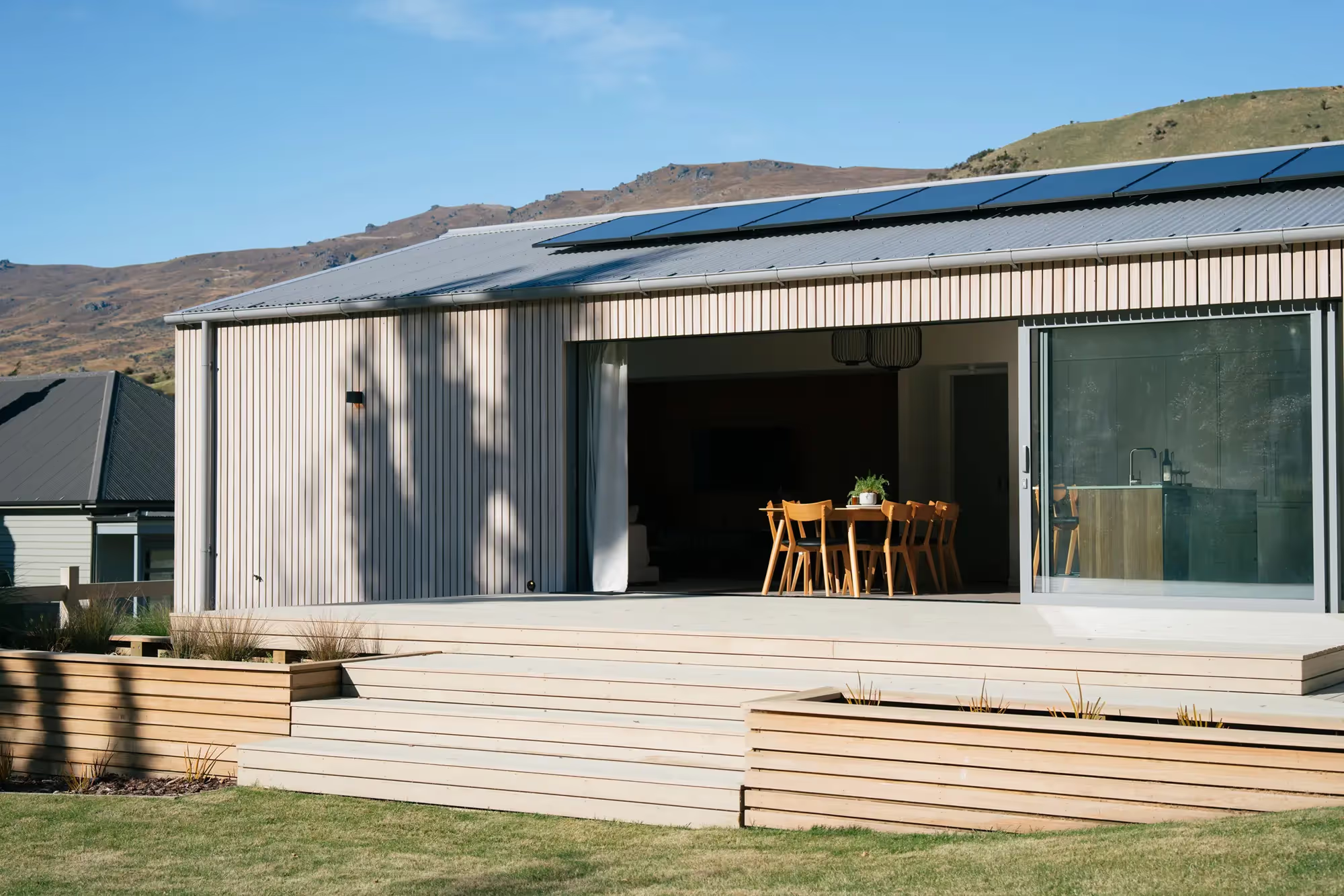
.avif)
Timber Properties that Influence Performance and Behaviour in Cladding Applications
When specified for cladding applications, timber exhibits material behaviours that must be understood to ensure predictable long-term performance. Understanding the fundamental properties of wood and how they influence behaviour in service - is essential to achieving durable, stable, and predictable architectural outcomes.
This article outlines the key timber characteristics that materially affect cladding performance.
DURABILITY: More Than Resistance to Decay
Durability is often narrowly understood as resistance to rot, but in a building context it is broader. True durability describes a timber’s ability to perform its intended function over time, under expected environmental conditions.
Naturally durable species such as larch, Douglas fir, and European oak have historically performed well in cladding applications due to the chemical composition of their heartwood. Less durable species including spruce and pine — can still be suitable when their use is carefully matched to exposure conditions or when they are modified or treated.
In well-designed, above-ground cladding systems, moisture management and detailing often play a greater role in service life than inherent biological resistance alone.
DIMENSIONAL STABILITY: Designing for Movement
All timber moves. Moisture-related expansion and contraction are inherent material behaviours, even in modified wood products. Dimensional stability is influenced by:
- Species
- Grain orientation
- Density
- Modification or treatment
- Presence of reaction or juvenile wood
Failure to accommodate movement can lead to cupping, splitting, or distortion, issues that are costly and difficult to remediate once installed. Successful cladding design allows boards to move freely, with fixings, spacing, and profiles selected accordingly.
Modified timbers typically offer improved dimensional stability, but they still require thoughtful detailing and installation. Grain Orientation and Board Selection
Boards exhibiting a vertical grain orientation, demonstrate improved dimensional stability and a significantly reduced propensity for cupping and surface cracking relative to tangentially sawn material. In practice, high-throughput sawmills optimise for yield rather than cladding performance. As a result, careful grading and selection become essential for façade applications. Higher-performing boards inevitably command a higher cost — but they also deliver better long-term outcomes.
Sapwood, Heartwood, and Moisture Uptake
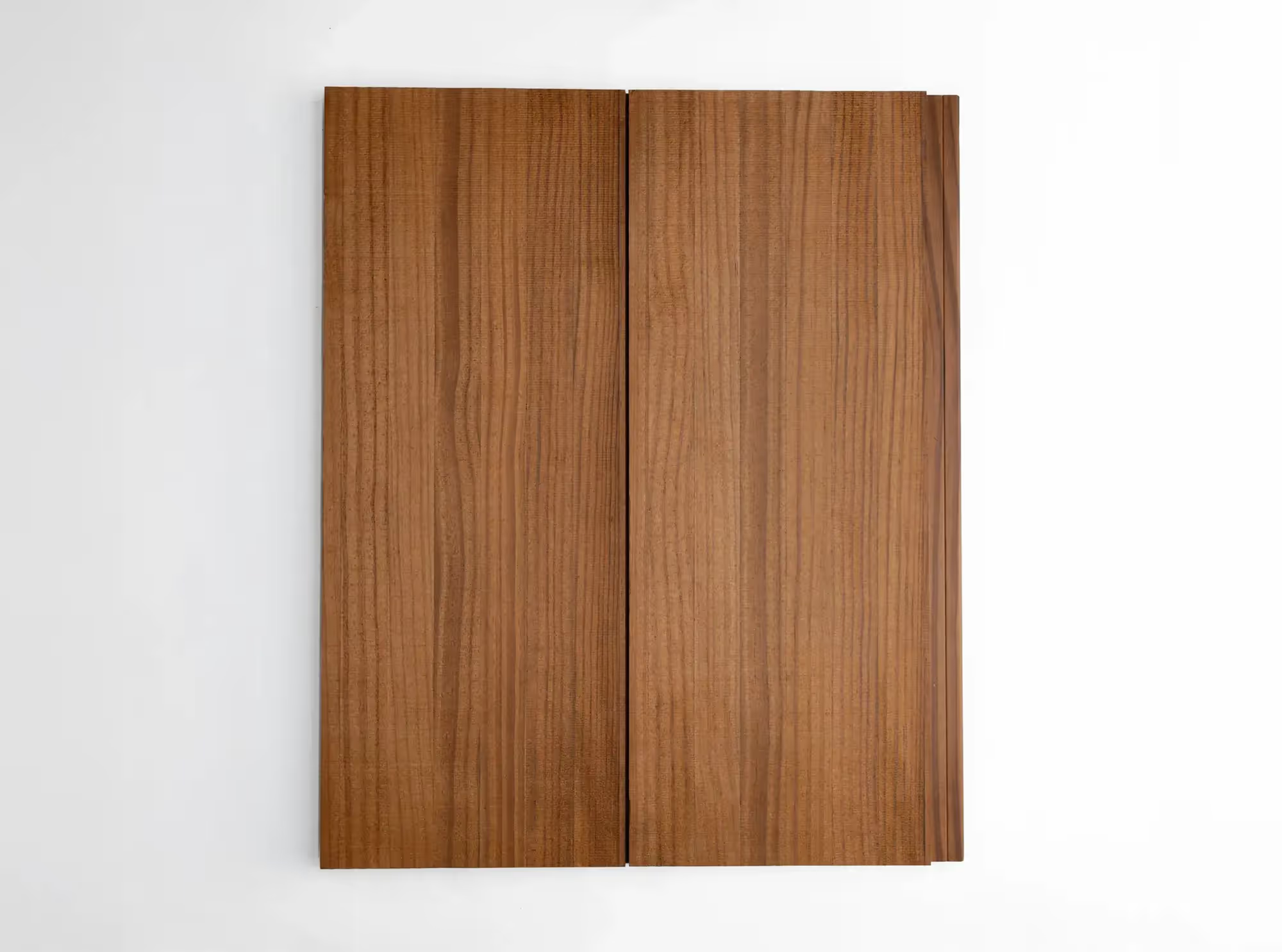
Heartwood and sapwood behave very differently. Sapwood is generally more permeable, absorbs moisture more readily, and is more susceptible to biological staining and decay.
Where sapwood cannot be fully excluded, best practice is to:
- Limit its exposure on the outer face
- Ensure it is well detailed
- Understand its implications for coatings and maintenance
In some species, visual differentiation between sapwood and heartwood is difficult, reinforcing the importance of supplier selection and grading standards.
Species Characteristics and Processing
Species selection affects not only durability and stability, but also processing efficiency. Density, resin content, and — in some hardwoods — silica content influence machining quality, tool wear, and consistency of finish.
Softwoods are generally easier to process and more economical at scale, while hardwoods often provide superior density and surface resilience at a higher cost. These trade-offs should be considered early, particularly for large or repetitive façade systems.Price, Availability, and Supply Chain Risk
Material choice is always influenced by availability and cost — factors that are increasingly shaped by global supply chains and geopolitical conditions. Life-cycle cost should be considered alongside upfront material pricing. Thermally modified or higher-grade timbers may carry a premium, but often reduce long-term maintenance and replacement costs.
Sustainable Sourcing and Compliance
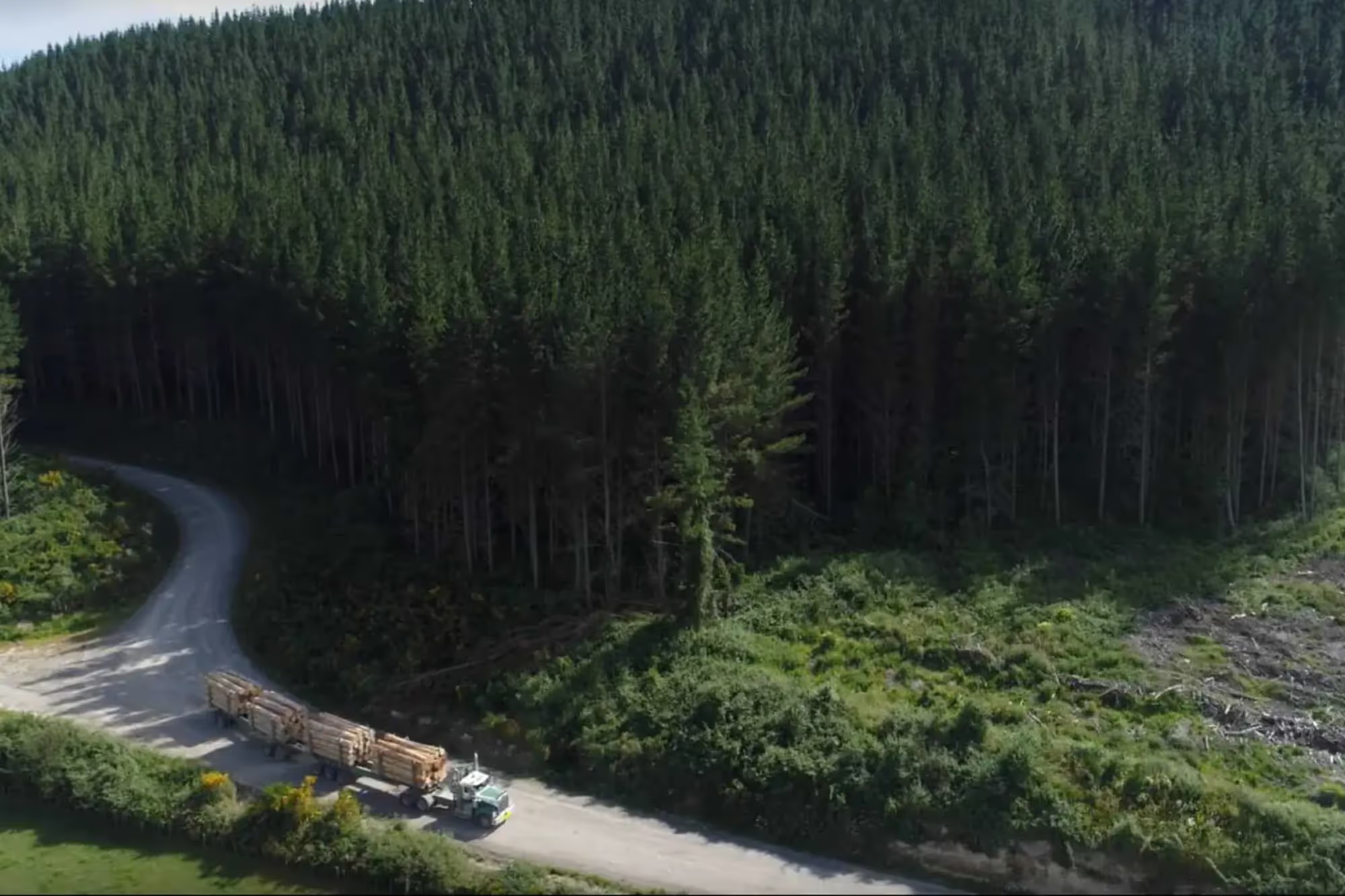
Sustainable procurement is no longer optional. Timber used in cladding applications must be sourced from legally and responsibly managed forests, supported by transparent supply chains.Certification systems and due diligence frameworks play a critical role in ensuring legality, environmental responsibility, and long-term resource availability. For designers and clients alike, sustainable sourcing is now a core performance criterion, not a secondary consideration.
Moisture, Weathering, and Service Life
Moisture is the single most influential factor affecting the performance of timber cladding. Biological degradation processes, including fungal decay, surface staining, and mould growth are governed primarily by the duration and frequency of elevated moisture content, rather than by occasional wetting events alone.
Effective service life is therefore achieved less through chemical resistance alone and more through appropriate design and detailing. Features that promote rapid drying — such as ventilated cavities, effective drainage and the avoidance of moisture traps — significantly reduce biological risk and improve long-term performance. When combined with suitable material selection, grain orientation, and installation practices, these measures are central to achieving predictable and durable outcomes in timber cladding applications.
Designing With Timber, Not Against It
Successful timber cladding does not rely on forcing wood to behave like an inert material. Instead, it comes from understanding its natural properties and designing systems that work with them.
When species selection, grading, detailing, and installation are aligned, timber offers a durable, expressive, and sustainable façade material capable of exceptional long-term performance.
Written by Matthew Felton
