


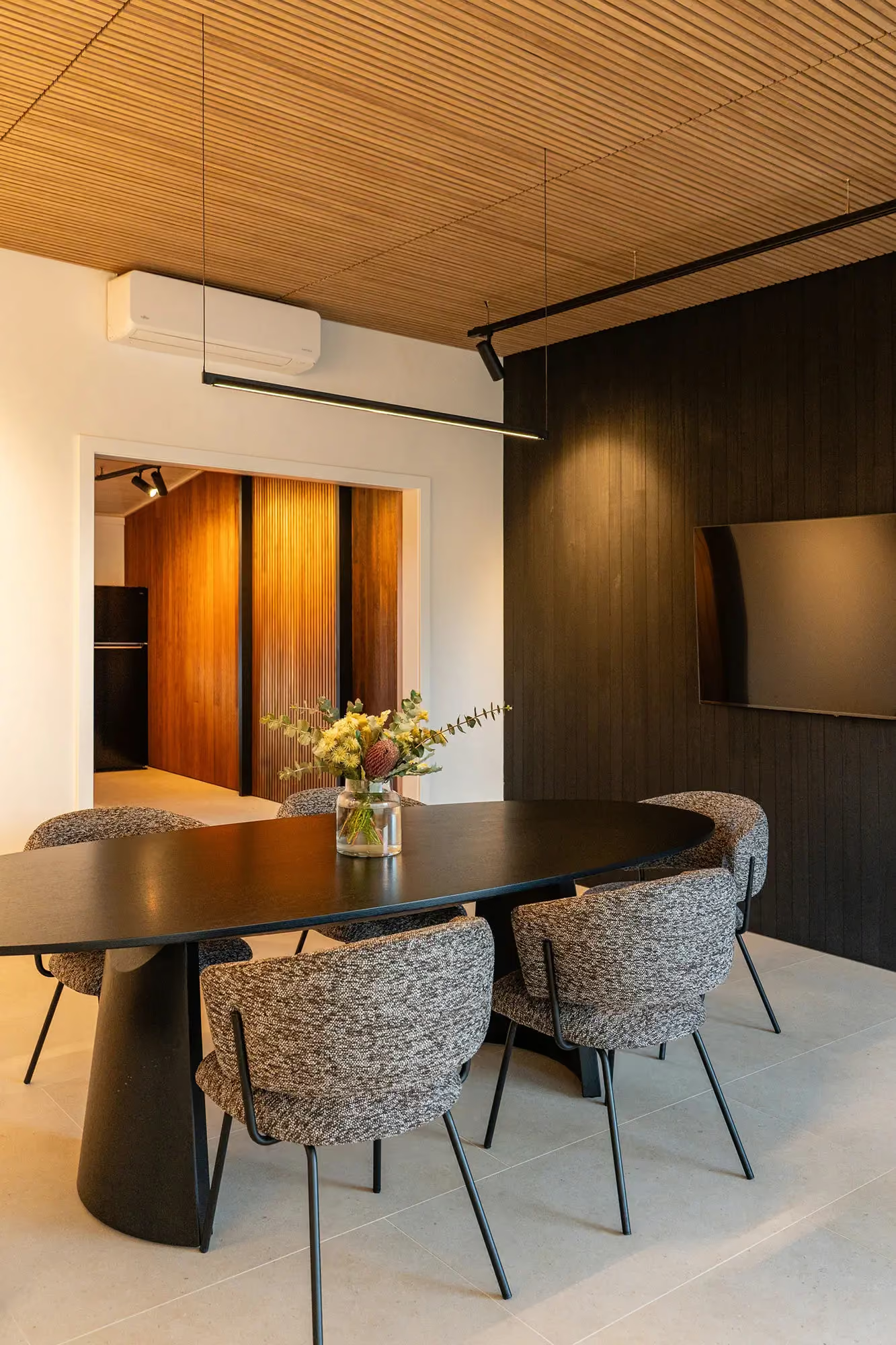
Designing Spaces that sound as good as they look
In modern interiors, sound plays a central role in design. Open, multifunctional spaces demand careful acoustic design to ensure comfort, wellbeing, and usability. Timber acoustic panels deliver a combination of technical performance and architectural warmth, making them ideal for offices, education, hospitality, and residential spaces.
“Acoustics can make or break a space. Even the most beautiful interiors feel uncomfortable if sound isn’t managed. Our panels perform technically while enhancing a room’s look and feel.”
Matthew Felton, Glosswood CEO

How Acoustic Panels Work
Unlike traditional noise insulation, which blocks sound between rooms, acoustic panels control how sound “behaves” within a space. They absorb reflections and reverberation, improving speech clarity, concentration, and overall space comfort and usability.
Timber is particularly effective when engineered into panels, which can be profiled, perforated, or combined with acoustic backing, for delivering high sound absorption while maintaining natural texture and warmth. “When these elements are properly designed, timber acoustic panels provide broadband absorption across speech-critical frequencies, making them ideal for human-centred spaces,” says Matthew.
Tested and Reliable Performance
At Glosswood, acoustic performance is validated through independent laboratory testing rather than assumed from design intent alone. Glosswood panels achieve a weighted sound absorption (αw) of up to 0.95 and a Noise Reduction Coefficient (NRC) of 1.00, tested in accordance with AS/ISO 354 standards. This means the panels provide highly effective control of reverberation, ensuring consistent acoustic comfort even in demanding interior environments such as auditoriums, offices, and restaurants. With verified performance, designers and architects can specify timber acoustic panels knowing the results will meet both functional and aesthetic expectations.
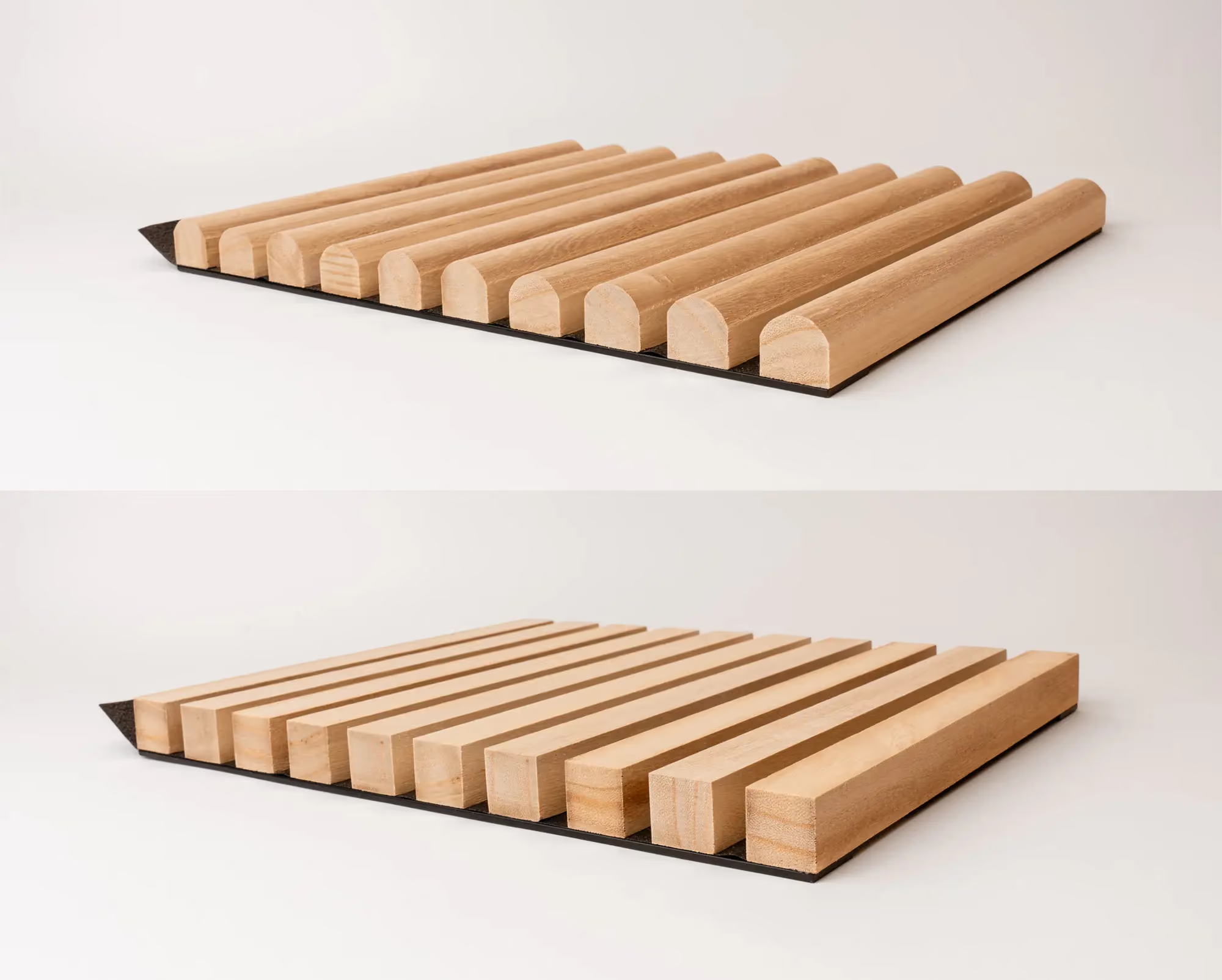
Design Integrity Meets Acoustic Function
Beyond performance, timber supports design integrity. “Acoustics should be embedded into the architecture, not added as an afterthought,” Matthew says. “Timber panels integrate seamlessly, supporting biophilic design, and becoming a natural part of the architecture.”
From offices, classrooms and restaurants to rumpus rooms and home theatres, timber acoustic panels simplify design, often reducing the need for extra treatments. As with all timber applications, acoustic performance is maximised when panels are specified as part of a considered system. Panel spacing, backing materials, cavity depth, and fixing methods all influence outcomes, so early collaboration between designers, acoustic consultants, and suppliers is criticial to achieving predictable results.
“When performance, testing, and materiality align, the result is a space that sounds as good as it looks,” says Matthew, “comfortable, inviting, and inspiring.”

