
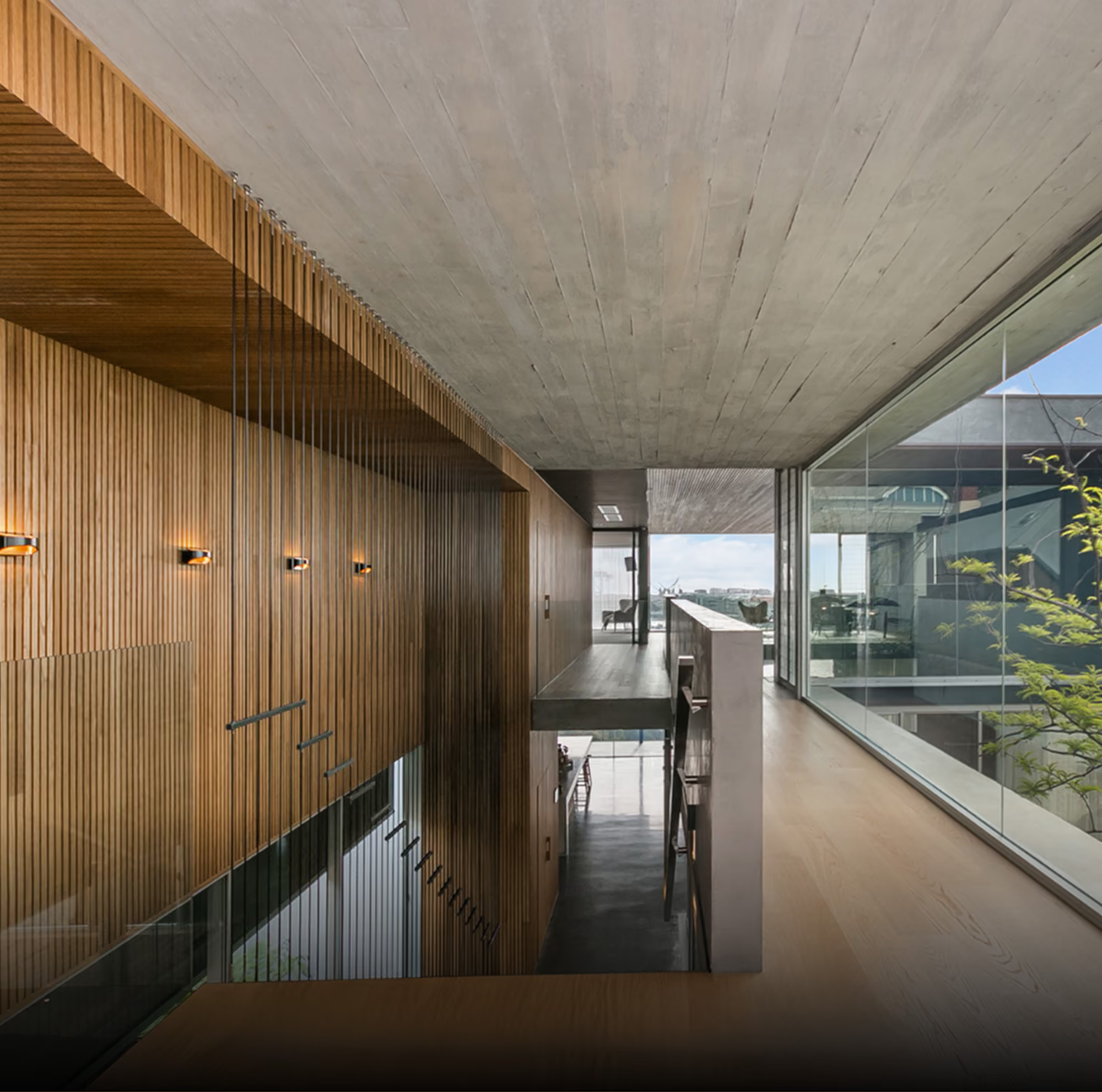
Using timber in renovation projects
Timber opens up a world of possibilities when you're ready to transform your home. Whether you're planning a complete renovation, adding extra space, or simply refreshing your home's appearance, timber gives you the flexibility to create something truly special without having to relocate.You've got plenty of options to work with. Traditional timber framing lets you reconfigure internal layouts or extend outwards, whilst engineered timber products like CLT, LVL, and glulam can handle larger spans and support ambitious additions like studios or self-contained units.
The practical benefits speak for themselves. Timber construction typically moves faster than concrete or masonry work, which means less disruption to your daily routine. The natural insulating qualities help keep energy bills down and make your home more comfortable year-round.
From a financial perspective, renovating often makes more sense than starting fresh elsewhere. You're investing in a property you already own, potentially boosting its value whilst avoiding the costs and stress of selling and buying. Plus, choosing timber aligns with sustainable building practices, which matters more to Australian homeowners every year.
Then there's the aesthetic appeal. Timber linings, cladding, and decorative features bring warmth and character that's hard to match with other materials. These natural textures and tones can genuinely improve how you feel in your space, creating a home that's not just functional but genuinely enjoyable to live in.
Timber systems for renovations
Timber framing basics
Lightweight timber framing speeds up construction significantly, cutting weeks off build times compared to brick or block work. This matters most when you're living through a renovation or extension, where every day of disruption counts.
The cost benefits are genuine too. Timber framing typically reduces overall project expenses whilst delivering the same structural performance you need.
Slimmer wall assemblies mean you gain precious internal space. In Australian homes where every square metre matters, this translates to noticeably larger rooms or more storage options in your extension.
Future changes become much simpler with timber construction. Need to add another room or reconfigure your layout down the track? Timber's adaptability means these modifications happen with minimal fuss and expense.
The thermal performance keeps your home comfortable year-round whilst reducing energy bills. Timber's natural insulating properties work particularly well in Australia's varied climate zones, maintaining stable indoor temperatures without overworking your heating and cooling systems.
Mass timber explained
Mass timber construction uses engineered wood products like cross-laminated timber (CLT), laminated veneer lumber (LVL), and glue-laminated timber (glulam) as the main structural elements. These large timber panels and beams form the backbone of walls, floors, and roofs in both homes and commercial buildings.
The precision factor sets mass timber apart from traditional construction. Elements are manufactured offsite to exact specifications, which means faster assembly and consistently high-quality results on site.
Prefabricated panels fit together with minimal gaps, creating excellent airtightness that boosts energy efficiency. This makes mass timber particularly valuable for projects targeting high thermal performance or Passive House certification standards.
Mass timber works brilliantly as a standalone solution but also adapts well to hybrid construction. You'll often see it combined with steel or concrete where specific structural or fire requirements need addressing.
Several high-profile Australian projects already showcase these hybrid approaches, proving mass timber's flexibility across different building requirements and scales.
Extension types and modular options
Timber extensions work across multiple project types, from second or third storey additions to front and rear extensions. You can also reconfigure existing internal spaces whilst preserving your home's original character and fitting into the neighbourhood aesthetic.
Modular solutions like studios or granny flats offer a particularly smart approach. These prefabricated options get assembled quickly, minimising disruption to your daily life and cutting construction timelines significantly.
The design flexibility with timber is genuinely impressive. You can customise layouts, finishes, and features to match exactly what your family needs. Whether you're updating your home's exterior or creating high-performance spaces separate from the main house, the options adapt to your vision.
Timber linings, claddings, and acoustic panels play a key role here. These elements create distinctive results that improve both the look and functionality of your space. Interior comfort improves noticeably with quality timber finishes, whilst exterior cladding gives your extension a cohesive appearance that complements the existing structure.
Benefits that matter during a renovation
Speed and programme
Prefabricated mass timber components dramatically speed up on-site work because panels and beams arrive precision-made and ready for assembly. This approach cuts build times compared to brick or concrete methods, with projects moving from delivery to lock-up stage in weeks rather than months.
Timber framing goes up faster thanks to its lighter weight, which makes site handling much easier and more efficient. Modular and panelised timber methods reduce wet trades and weather delays, keeping construction schedules tight and predictable.
Quicker construction benefits project timelines and limits neighbourhood impact. Less time on site means reduced noise, dust, and disruption for surrounding residents and businesses.
Efficient scheduling streamlines project logistics, making it easier to meet tight deadlines or coordinate with other trades. In high-demand Australian suburbs, shorter build programmes let families return to their homes sooner and minimise inconvenience during extensions or major renovations.
Energy efficiency and comfort
Timber framing delivers excellent insulation, helping homes maintain comfortable, stable indoor temperatures throughout the year. The cellular structure of timber slows down heat transfer, which means less reliance on heating and cooling systems and a more consistent indoor environment that suits Australia's diverse climates.
Mass timber systems extend these benefits further. Engineered wood panels such as cross-laminated timber enhance a building's airtightness by ensuring snug joinery with minimal gaps, which dramatically reduces unwanted air leaks.
This increased airtightness lowers heating and cooling demand, making it easier and more cost-effective to meet high-performance energy targets. These properties make timber and mass timber solutions particularly well-suited to rigorous standards such as Passive House principles.
The result is both energy savings and superior comfort for Australian homes. Your heating and cooling bills drop whilst indoor comfort improves year-round.
Sustainability
Timber genuinely stands out as one of the most sustainable building materials available because it's naturally renewable and stores carbon throughout its entire lifecycle. Trees absorb carbon dioxide as they grow, locking that carbon into the wood even after harvesting and construction.
Meanwhile, producing steel and concrete creates massive emissions, accounting for roughly 13% of global carbon output. Choose timber for your renovation or extension, and you'll dramatically reduce the embodied carbon footprint compared to conventional materials.
Sourcing timber from responsibly managed Australian forests takes sustainability even further. Proper forest management ensures regeneration continues, biodiversity stays protected, and carbon sequestration keeps working for future generations.
Timber linings, cladding, acoustic panels, and similar products from sustainable sources create market demand that supports ongoing responsible forestry practices. This demand directly encourages environmental stewardship across the industry.
Extending or renovating beats rebuilding from a sustainability perspective too. You're saving raw materials, energy, and avoiding the waste that comes with demolition and new construction.
Apply timber to these upgrades and you maximise the sustainability benefits whilst reducing environmental impact. The result is high-quality, functional, beautiful outcomes that suit Australian homes perfectly.
Aesthetics and design flexibility
Timber's natural grain and gentle warmth create a distinctive aesthetic that transforms both interiors and exteriors. Whether you use it for subtle accents or bold feature elements, the visual impact is immediate and lasting.
You can choose to leave timber exposed through lining boards or decorative beams, showcasing those natural variations in colour and texture that make each piece unique. Alternatively, finishing options like stains or lacquers give you complete creative freedom to match any interior palette or architectural style you're after.
Timber framing and mass timber solutions support an impressive range of design choices. Think crisp shadow lines and refined acoustic panels for contemporary interiors, or classic shiplap profiles that add character to home extensions. This versatility works beautifully for both minimalist approaches and intricate, detailed finishes.
This flexibility proves especially valuable during renovation projects, where blending new work with existing features often requires custom joinery and perfectly coordinated trims. Timber adapts to these challenges better than most materials.
Extensions built with timber can dramatically improve both your home's street appeal and internal living experience. Natural timber cladding or feature panelling adds depth and visual interest to older homes, whilst inside, the warmth and tactile quality create genuinely inviting, comfortable spaces that enhance daily life.
The result is a renovation that updates your home's functionality whilst enriching its architectural expression and overall value. It's this combination of beauty and practicality that makes timber such a compelling choice for Australian home improvements.
Common renovation scenarios with timber
Adding a second or third storey with timber construction can create much-needed bedrooms and living zones without the upheaval of moving house. Timber's lightweight nature makes these vertical additions straightforward, ensuring your existing structure can often support the new levels whilst blending seamlessly with the original build.
Front or rear timber extensions offer a practical way to expand kitchens and living areas, delivering the open-plan settings that modern Australian families want. These extensions work beautifully with both heritage streetscapes and contemporary facades, using timber cladding and lining boards to complement or enhance your home's appearance.
Reconfiguring interiors becomes simple with timber framing, making it easier to adjust layouts, improve circulation, and maximise functional space. Timber's adaptability means walls and features can be added or removed with minimal disruption, supporting your changing household needs over time.
For a quick boost in usable space, modular timber additions like studios, home offices, or granny flats are increasingly popular across Australia. Prefabricated panels and components assemble quickly, cutting construction time and reducing site disturbance. These solutions work well both as standalone units or as part of larger renovation projects.
Hybrid structural approaches pair mass timber with materials like steel or concrete, letting designers address specific load or fire requirements whilst maintaining timber's aesthetic and thermal advantages. This flexible approach ensures timber can be used effectively across various Australian renovation scenarios, whether for major extensions or precise reconfigurations.
Planning considerations and current challenges
The Australian mass timber market is growing stronger thanks to more suppliers entering the field and deeper industry knowledge. This means better supply reliability and sharper pricing that makes quality timber construction accessible to more homeowners tackling renovations.
You'll find it much easier now to source the timber products you need, whether that's acoustic panels for better sound control or decorative beams to add character. This wider availability opens up project possibilities that might have been too expensive or complicated just a few years ago.
Working with experienced designers and builders makes all the difference. They understand how to maximise timber's natural strengths and create layouts that suit modern Australian living. These professionals, along with architectural timber suppliers in Perth, know exactly how to integrate timber elements like lining boards or shadow lines to deliver both function and visual appeal.
Fire performance is often misunderstood, but engineered timber actually handles heat exposure quite well. When exposed to high temperatures, the outer surface chars and forms a protective barrier that slows fire progression significantly. This natural characteristic helps meet Australian safety standards without compromising structural integrity.
Traditional timber framing continues proving its worth across the country. Properly designed and installed systems cope brilliantly with Australia's challenging weather conditions, delivering reliable long-term performance for extensions and major upgrades.
Budget constraints don't have to limit your options. Strategic use of exposed lining boards, subtle trims, or feature elements can transform a space whilst improving acoustic comfort. The expanding timber market means these impactful design choices are becoming more affordable across projects of different scales and budgets.
How a timber renovation typically unfolds
Your timber renovation begins with collaborative early planning, where you and your design team explore the best ways to extend or reconfigure your home. Modern approaches encourage fresh thinking like adding a new storey, reshaping living zones, or creating a separate studio space, all whilst maximising your property's potential and making sure your home suits your family's changing lifestyle.
The next step involves selecting the right structural system, often comparing traditional timber framing against engineered mass timber panels, or combining both approaches. Your decision depends on performance needs, the architectural look you're after, project budget, and timelines. Each system offers different advantages for aesthetics, insulation, structural span, and future adaptability, with mass timber particularly valued for its strength across larger open-plan areas.
Prefabrication plays a major role, with structural elements and feature products like lining boards or acoustic panels manufactured off-site. This enables precise, rapid assembly and compresses construction schedules, significantly reducing noise and site impact in established neighbourhoods. On-site works become streamlined, meaning less disruption for you and your neighbours.
Quality stays front and centre throughout every stage. This includes specifying feature timber products for visual impact, ensuring high-quality installation, and using materials that enhance acoustic and thermal comfort for lasting value. Upgrades like shadow lines, decorative beams, or custom trims improve your daily experience whilst elevating the final finish both inside and out.
Modern timber renovations plan ahead by building in flexibility and adaptability. Layouts and structural choices are made so spaces can be easily reconfigured, extended, or upgraded as your needs change, keeping your home functional and relevant for years to come.