
How Long Does Vulcan Cladding Last? Durability, Warranty and What Affects Its Lifespan
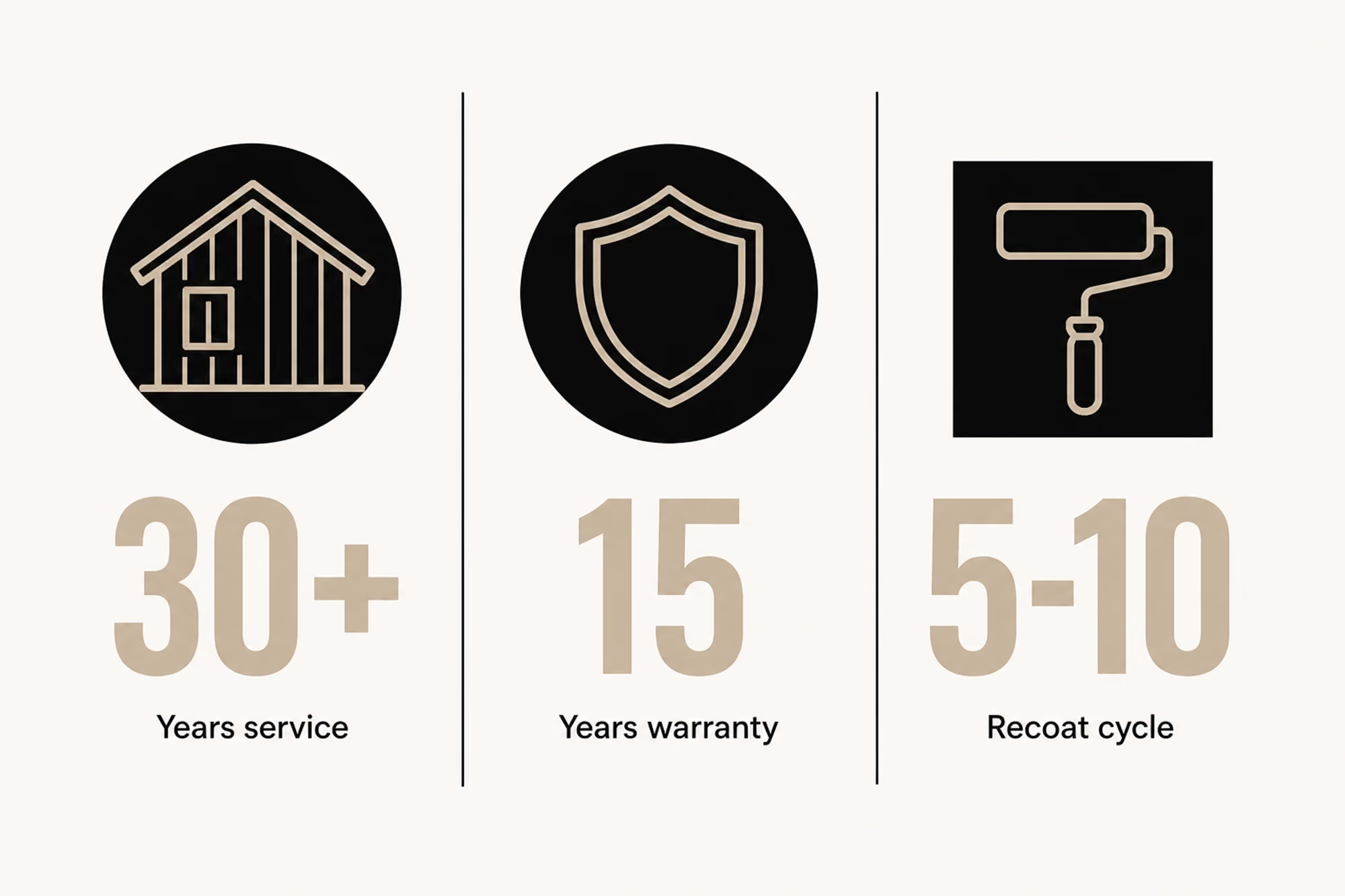
If you are asking how long Vulcan cladding lasts, the number to work with is 30 years or more, which is the stated life expectancy for properly specified, installed and maintained Vulcan Cladding, backed by a 15 year Built to Last Warranty. The gap between those two figures is where most of the confusion sits, so it is worth understanding before you specify.
What follows separates the three things buyers tend to blur together: how long the timber itself performs as a wall covering, what the warranty actually promises, and how quickly the surface changes appearance. From there we look at the exposure conditions, detailing decisions and coating choices that decide whether a façade comfortably exceeds 30 years or starts causing trouble at year eight.
How long does Vulcan cladding last when specified and maintained properly?
Thirty years plus is the realistic expectation for the timber substrate on a well-detailed Australian wall, assuming the cladding is installed to the current design and installation guidance, ventilated properly, kept clear of standing water and recoated when the coating system calls for it. Exposure, detailing and upkeep are the variables; the timber's durability is the constant.
The surface is a different story, because colour shift, gradual greying, fine surface checking, dirt and salt build-up and coating wear all show up well before the boards approach the end of their service life, particularly on the elevations that take the most sun. None of that means the cladding is failing. It means the finish is doing its job and reaching the end of its own cycle, which is shorter than the timber's. Products such as vulcan cladding are designed with this distinction in mind, offering long-term structural performance while still requiring the periodic surface maintenance any exposed timber finish needs.
So the honest framing is long-term structural service with periodic appearance maintenance, rather than three decades of unchanged looks. Sheltered elevations with sound junctions and regular cleaning will often run past the expected service life, whereas highly exposed walls with poor ventilation, moisture traps or a neglected coating can fall short of it, sometimes by a wide margin.
What thermal modification actually contributes
Vulcan is made from New Zealand plantation radiata pine treated with heat and steam rather than chemicals, which leaves the timber effectively pre-shrunk with a low moisture content. The practical result is a board that will not warp, cup or bleed resin the way an untreated softwood would, and that stability is what makes it suitable for dark colours even in warm climates.
Stability matters for lifespan because coatings and fixings fail at the points where timber moves. A board that stays flat and dimensionally consistent keeps its coating film intact, keeps fixings seated and keeps joints closed against water. The manufacturing adds two more durability features: a patented engineered vertical grain orientation that reduces surface cracking and supports stable weathering over time, and a fine sawn surface finish that improves coating adhesion and performance, which in turn cuts maintenance frequency.
What thermal modification does not do is make the product maintenance-free. It is still timber on an exposed wall, so it will weather, and it depends on correct installation, a suitable coating and ongoing care to reach the durability it is capable of.
What the 15 year warranty does and does not cover
Vulcan Cladding carries a 15 year Built to Last Warranty, and it is best read as a defined period of manufacturer protection on the product rather than a prediction of total lifespan or a suggestion that the cladding stops performing at year sixteen. The 30 plus year figure describes expected service life; the warranty describes the window in which the manufacturer stands behind the timber.
It is also worth separating the timber substrate from the finish, because the coating, colour retention and any maintenance coats you apply later typically sit under their own terms from the coating supplier, with their own exclusions and recoat requirements. Fading, chalking and general weathering of a finish are usually treated as expected performance rather than a defect, so do not assume timber cover extends to appearance.
Eligibility depends on the installation being right, which means suitable use for the project's exposure, an approved installation method, compliant fixings, adequate ventilation behind the boards, sealed cuts and ends, and a maintenance record you can actually produce. Before you order, confirm the specifics for your project: location and exposure level, the coating system chosen, the profile, the fixing method, and whether the installer is working to the current design and installation guide. Warranty terms can change and can differ by finish and application, so check the current documents with Glosswood at specification stage rather than after the boards are up.
Exposure factors that add or subtract years
Orientation is the first thing to look at. In Australia, north and west-facing elevations take the heaviest UV and heat load, so coatings age faster and colour shifts sooner on those walls than on sheltered south or east-facing ones. It is normal for one elevation of a house to need recoating well ahead of the others, and planning for that beats being surprised by it.
Shelter from rain matters just as much, since cladding under generous eaves or protected by overhangs goes through far fewer wetting and drying cycles than a fully exposed façade, and fewer cycles means slower weathering and longer intervals between maintenance. Coastal sites add salt-laden air, wind-driven rain and abrasive particles, all of which increase cleaning and recoating demands and make appropriate fixing selection more important, because corrosion at the fixing is a common early problem near the sea.
The distinction to hold onto is this: UV mostly changes how the cladding looks and how long the coating lasts, while repeated moisture retention is the real threat to long-term durability. Poor cavity ventilation, water trapped behind boards, insufficient clearance from ground level or paving, splashback off hard surfaces, vegetation growing against the wall and horizontal ledges that hold water are the conditions that shorten service life rather than just dull the finish.
Locking in the detailing and coating plan before installation
The details that protect Vulcan over thirty years are decided before the first board goes on. Specify a drained and ventilated cavity so the back of the boards can dry, use fixings suited to the exposure and the profile, and seal every cut and end, because exposed end grain is where water gets in fastest. Choose a profile appropriate to how exposed the wall is, design junctions, sills and flashings to shed water outwards, and eliminate horizontal ledges and any junction where water can sit.
On finishes, a factory-applied coating gives you consistent film build and reliable protection from day one, which is a real advantage over site-applied finishes on a large façade, though it does not remove the need for inspection and recoating later. Dark colours are genuinely viable on Vulcan thanks to its stability, but darker finishes absorb more heat and will usually show fading, chalking or surface change earlier than lighter ones, so factor a shorter recoat cycle into the decision rather than treating colour as purely aesthetic.
Maintenance itself is undemanding but not optional. Inspect the façade at least annually, wash off dirt and salt, keep planting cut back from the wall, pay particular attention to corners, junctions and the lowest boards, reseal any damaged or freshly cut areas promptly, and recoat to the interval the coating supplier specifies for your exposure level.
For a buyer, the decision comes down to fit. If a 30 plus year expected service life, a 15 year warranty framework and a recurring recoat cycle suit the project and the client's appetite for upkeep, Vulcan stacks up well. If they do, settle the detailing, fixings and coating plan with your supplier and installer before installation starts, because almost every case of cladding falling short of its lifespan traces back to a decision made at that stage.